Professional Toilet Repair Services in Pierce County
Fast, Reliable Toilet Restoration Across Orting, Puyallup, Tacoma & Greater Pierce County
When a toilet overflows, runs constantly, or rocks at the base, immediate attention is essential to protect your bathroom floor from costly, unsanitary water damage. At RossCo Service Plumbers, local owner Richie Ross and our field team provide straightforward, honest repairs. Whether you need a local service plumber in Orting or an emergency plumber for toilet repair in Tacoma, we pinpoint internal valve failures and structural leaks to restore full flushing power without high-pressure sales tactics.
Need immediate help with a broken toilet? We offer free upfront estimates with no hidden fees.
Fixing Constantly Running Tanks & Internal Valve Failures
Toilets rely on a delicate balance of internal seals and valves inside the porcelain tank. Pushing the flush handle pulls a chain that lifts the rubber flapper, releasing water into the bowl. Over time, mineral buildup from local water sources and harsh cleaning chemicals warp and harden these rubber components. When the flapper fails to seal flatly, water continuously leaks into the bowl, forcing the fill valve to cycle on repeatedly.
Common Symptoms
Constant hissing sounds, "ghost flushing" in the middle of the night, or sudden spikes in your monthly water bill.
The Risk
Ongoing water leaks increase utility costs over time while causing stubborn mineral rust staining on porcelain surfaces.
The RossCo Solution
Hiring an experienced plumber for toilet repair stops continuous water waste. Our technicians remove degraded flappers, replace faulty fill valves, adjust misaligned float arms, and recalibrate your tank for quiet, efficient operation.
3 Quick Things to Check Before Scheduling a Service
Check the Shut-off Valve
Ensure the emergency valve behind the toilet is turned fully counterclockwise.
Inspect the Lift Chain
Make sure the chain has a tiny bit of slack so the flapper can drop all the way down to seal.
Look for Base Moisture
Check if water is pooling on the bathroom floor, which indicates a failed seal rather than a tank issue.

Addressing Base Leaks, Rocking Fixtures & Failed Wax Rings
The connection between your porcelain toilet bowl and the underlying sewer drain pipe is sealed by a heavy-duty wax ring sitting atop a closet flange. If your toilet rocks back and forth when sat upon (often caused by home settling or loose floor bolts), that structural movement breaks the airtight wax seal.
Structural Risk
Wastewater leaking under the base often seeps beneath tile or vinyl, rotting out the plywood subfloor long before water becomes visible on top of the flooring.
Our Restoration Process
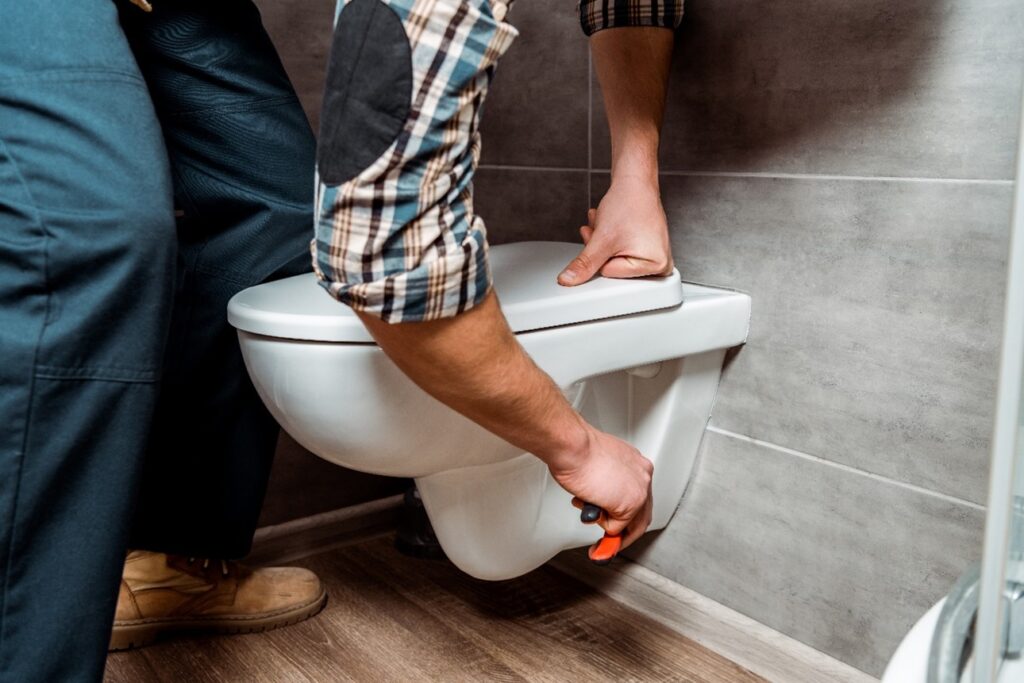
Our team provides specialized toilet repair in Puyallup and the surrounding communities to stabilize rocking fixtures and stop active leaks. We pull the porcelain toilet entirely, scrape away old wax, inspect the closet flange for cracks or structural fatigue, install a reinforced extra-thick wax ring, and bolt the unit down securely to eliminate rocking permanently.
Frequently Asked Questions
Why does my toilet tank take an exceptionally long time to refill?
A slow-refilling toilet tank is typically caused by a clogged fill valve aperture or a partially closed water supply valve. Over time, mineral scale and pipe debris lodge inside the valve assembly, restricting water flow into the tank.
- Primary Culprit: Mineral debris restricting the small internal diaphragm inside the fill valve.
- Quick Fix: Ensure the chrome shut-off valve on the wall behind the toilet is turned fully open. If the issue persists, contact plumbers in Orting WA, to replace the internal fill valve assembly.
What causes water to gurgle inside the toilet bowl when the shower is running?
Gurgling in the toilet bowl indicates an atmospheric pressure issue caused by a blocked roof vent stack or a developing mainline clog. When shower wastewater flows down the pipe, trapped air is forced back up through the toilet trap.
- Why it Matters: Plumbing vents exit through your roof to let air into the pipes. If leaves, snow, or debris block the vent, wastewater pulls air backward through your toilet.
- Warning: Unaddressed gurgling is often an early warning sign of an impending sewer main backup.
Is it safe to use chemical drop-in tablets to keep the toilet bowl clean?
No, blue or white chemical drop-in tablets should never be used in your toilet tank. These concentrated disks sit in stagnant water for hours, creating a highly corrosive solution that eats away at internal rubber and plastic parts.
- The Hazard: Caustic chemicals rapidly degrade rubber flappers, tank-to-bowl gaskets, and plastic fill mechanisms, triggering sudden structural leaks.
- Better Alternative: Use standard bowl-cleaning sprays or manual brushes that do not sit continuously inside the tank reservoir.
What causes a weak flush where waste fails to clear the bowl?
A weak flush is usually caused by low tank water levels, a slack lift chain, or clogged siphon jet holes beneath the bowl rim.
- Hard Water Factor: In areas across Pierce County with hard water, calcium deposits gradually clog the small siphon jet holes and rim holes, slowing down the water velocity required to create a strong siphon.
- The Solution: Adjusting the float arm, tightening the lift chain, or clearing mineral deposits from the siphon port restores proper flushing velocity.
How can I tell if my toilet flange is broken and needs replacing?
You can tell a toilet flange is broken if the toilet continues to rock or wobble after the floor bolts have been tightened.
- Structural Mechanics: Floor bolts lock into slots along the perimeter of the closet flange. If those plastic or cast-iron slots crack, the bolts lose their hold, making it impossible to secure the toilet safely.
- The Repair: Requires removing the toilet to install a flange repair ring or replacing the damaged flange entirely.
Ready to Get Your Toilet Repaired?
Don’t let a running tank waste water or a rocking toilet damage your subfloor. Contact Richie Ross and our local team of plumbers in Orting WA, for honest diagnostics, clear upfront pricing, and fast response times across Pierce County.